Tshuab siv yuav tsum tau nro tsim nyog kom ua haujlwm kom raug. Yog tias qhov nro tawm,txoj siv yuav khiav nruj dhau los yog xoob dhau ntawm lub pulley. Thaum qhov no tshwm sim, Slippage yuav tshwm sim. Tshav kub tsim los ntawm kev sib txhuam, Thiab nws yog qhov muaj feem ntau tias txoj siv sia yuav tawg lossis tawg.
Y, o. g, then, t, ultimately, i.
a
s? Pom tseeb, if you see cracks in the belt, t. x, o. j, be on the lookout for a hardened appearance, s, i, v, you probably have a tension issue.
t. Newer belts generally require higher tension levels because they haven’t been “run in.” Ideally, a belt should be tensioned such that the force required to achieve the desired deflection distance is within the belt’s manufacturer’s recommended force values for the type of belt(s) being used.
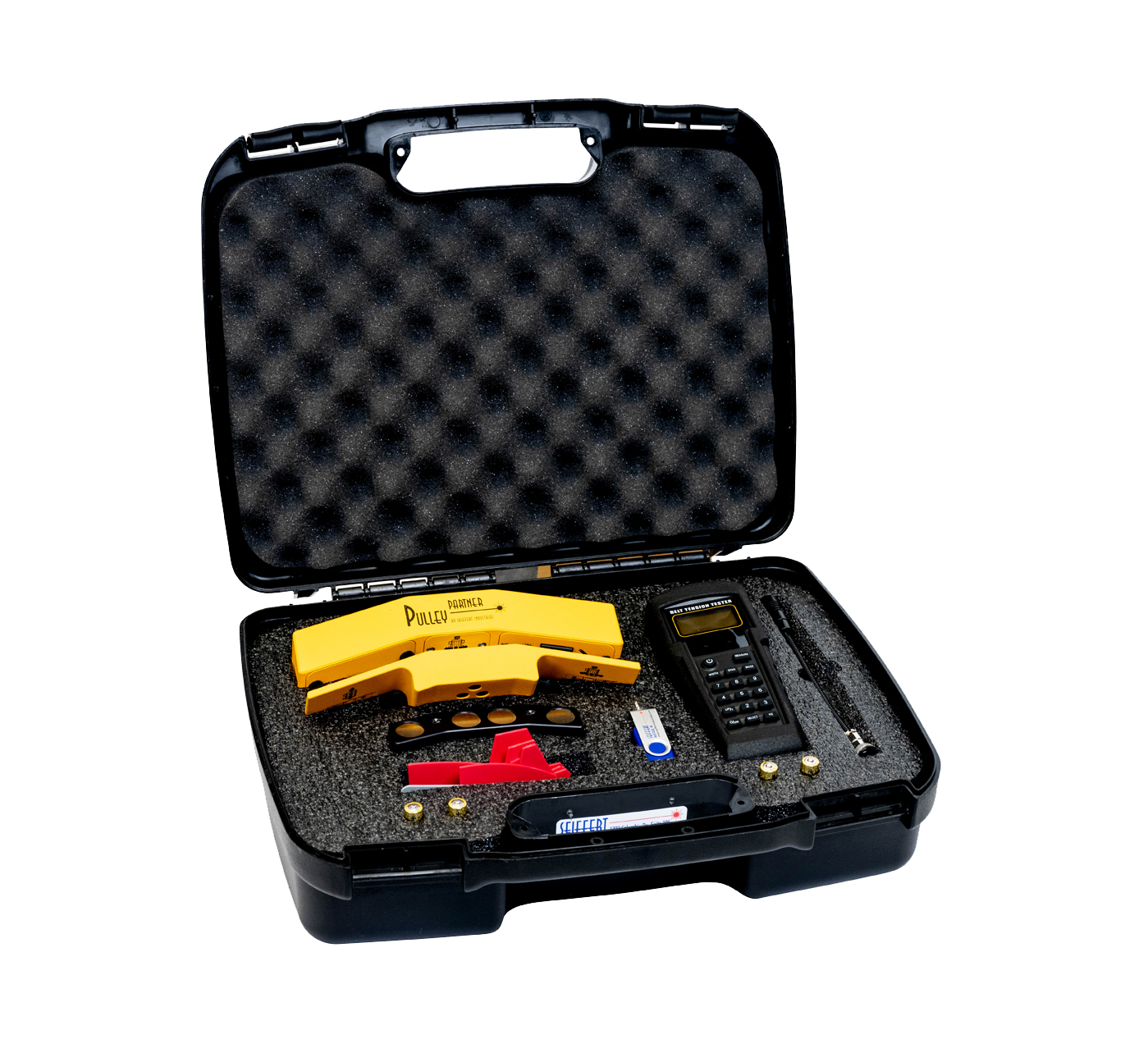
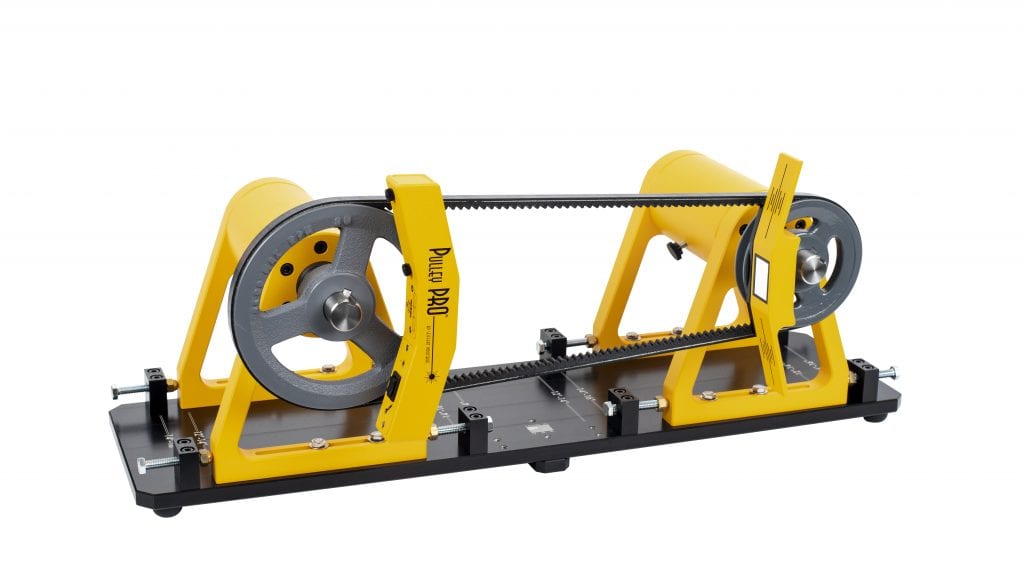
Keep in mind that belt tension adjustments may alter pulley alignment and pulley alignment adjustments can alter belt tension levels. Seiffert Industrial recommends the Cuab tam tuab si lug Pulley pro® which can be used to help monitor the pulley alignment condition as belts are adjusted for the correct tension level. We also recommend the Rooj vag ' meter ' Sonic nro which measures belt span tension easily and accurately. N, r. Belt tension is adjusted until the belt span frequency or measured tension level is within manufacturer’s recommendations.
Check out this Seiffert Industrial page for more info on belt tension methods.