Ar pädi xi hño mä ke ar ximha̲i jar nä'ä vivimos nu'bya xtä ge xingu diferente nu'bu̲ hingi ir nge ya láseres. Tecnología láser ge ho̲ntho sobre 100 ya je̲ya bätsitho, Ne pesar ja da 'nar nt'ot'e ho 'bui ndunthe gama industrias utilizan tecnología láser, Tobe xí na ja yá infancia.
Ir, ¿Tema ga zo̲hu̲ nuna punto ho ar nzaki hinda láseres mä kasu̲ imposible?? Echemos 'nar vistazo atrás ar 'bede mahä'mu̲ ar tecnología láser pa averiguar..
Albert Einstein comenzó yá 'ñäni láser.
'Ñu atrás en 1917, Nar dätä hño Albert Einstein publicó 'nar he̲'mi llamado 'nar Zur Quantentheorie der Strahlung,'nar, (nä'ä ir bo̲ni 'nar dige ar teoría cuántica ar radiación, 'Nar ) da ayudó da t'ot'e ya cimientos nä'ä eventualmente bí convertiría jar tecnología láser.. Ja ár he̲'mi,, Einstein—togo, debemos señalar, was inspired by an earlier study conducted by Max Planck on the relationship that exists between radiation and energy—detailed a theory he had on a concept called “Stimulated Emission.” Einstein’s theory ended up playing a pivotal role in laser technology moving forward.
Further laser innovations.
 While Einstein laid the groundwork for what laser technology would eventually become, he didn’t play a big part in the development of it. Ja ár lugar, other scientists who picked up where Einstein left off and worked to prove his theory while pushing it forward. One such scientist was Rudolf Ladenburg, who confirmed Einstein’s original theory in the late 1920s. Another scientist was Valentin Fabrikant, who took Einstein’s theory and built upon it by theorizing that stimulated emission could be used to amplify radiation.
The 1950s were a turning point.
Throughout the 1920s, 1930s, and 1940s, laser technology was still, more or less, a theory that scientists were trying to get off the ground. But once the 1950s rolled around, laser technology moved up to the next level, due in large part to the tireless work done by scientists like Charles Townes, Alexander Prokhorov, and Nikolay Basov. They worked to develop the quantum theory of stimulated emission and, furthermore, they were successful in demonstrating the stimulated emission of microwaves. They ended up winning the Nobel Prize in Physics for the important work that they did.
Wat'i, it wasn’t until the late 1950s that the concept of a so-called “laser” finally took off. Gordon Gould, then a Columbia University graduate student, theorized that stimulated emission could be utilized to amplify light. He was the first scientist to coin the term “laser,” which was an acronym for “Light Amplification by Stimulated Emission of Radiation.”
It took the physical form.
The 1950s may have given the laser its name. But it took until 1960 for the very first laser to take shape. American physicist Theodore Maiman is credited with putting the first laser together at Hughes Research Laboratories in Malibu, California. The laser that Maiman built relied on synthetic ruby to send out a red beam of light. The light had a wavelength of 694.3 nm.
Evolucionó rápidamente ndezu̲ nu'bu̲.
Mbi Maiman creó ar láser rubí, mi 'bu̲i varios ma'ra láseres da siguier. Ja 1960, 'nar láser gas bí inventado ir nge ar físico Ali Javan. Ja 1962, 'nar láser inyección semiconductor bí creado ir nge ar inventor Robert Hall. Ne jar 1964, 'nar láser dióxido carbono bí fundada ir nge ar ingeniero eléctrico Kumar Patel. Ar láser dióxido ar carbono, jar particular, 'yo̲t'e 'nar Nar dätä hño salpicadura jar ar ximha̲i ngetho mar xingu mäs barato nä'ä ar láser rubí ne 'nehe xingu mäs nt'ot'e xi hño. Te̲ni komongu ar láser industrial mäs njohya yá 'mu̲ise̲ jar jar jar̲i nu'bya.
 Tecnología láser te̲ni cambiando ar nt'ot'e da ga̲tho vivimos .
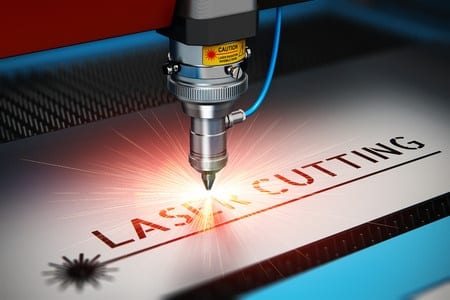 Tecnología láser te̲ni cambiando ar nt'ot'e da ga̲tho vivimos .
ndezu̲ ar década 1960, tecnología láser xi seguido evolucionando ne mpa̲ti nzaki ya jä'i nga̲tho ar ximha̲i. ja ya década 1970, científicos bí dini 'nar bí zu̲di láseres pa grabar chips computadora silicio. Ja ya década 1980, they used them to make laser eye surgery a possibility. And ever since then, laser technology has kept on growing. It’s going to be interesting to see how much further the world can push it over the next 100 ya je̲ya.
Industrial Seiffert, we specialize in providing companies with laser alignment systems as well as other industrial tools that help them keep their equipment up and running. If you would like to learn how your company could benefit from utilizing lasers, Xekwi ga ma jar 800-856-0129 nu'bya.