Gdy układ napędu pasowego działa płynnie, łatwo zapomnieć, ile precyzji wymaga utrzymanie tego stanu. Ale kiedy napięcie opadnie, nawet nieznacznie, możesz skończyć z poślizgiem, nadmierne zużycie, hałas, wibracja, i kosztowne przestoje. That’s why using a sonic belt tension meter is one of the smartest ways to keep your equipment performing at its best.
Niezliczone przedsiębiorstwa przemysłowe korzystające z pasów maszynowych odniosły ogromne korzyści ze stosowania Miernik napinania pasa Sonic. Parafrazując, Sonicowy miernik naprężenia paska służy do sprawdzania, czy paski działają wydajnie i mają prawidłowe napięcie. Dostarczają odpowiedzi potrzebnych do ustalenia, czy należy wyregulować napięcie pasków maszyny. They take the guesswork out of belt maintenance by delivering fast, accurate readings in a compact, easy-to-use design. Whether you’re working with synchronous belts or V-belt drives, knowing how to properly use your meter can make a big difference in both performance and equipment longevity.
Wskazówki dotyczące korzystania z paska Sonic Miernik naprężenia
Start With the Right Belt Information
Before taking a reading, make sure you have the correct belt width and length measurements ready to enter into the device. Accurate input information is key because the meter calculates tension based on the belt’s vibration frequency. Even the best tool can only provide reliable results when the setup data is correct.
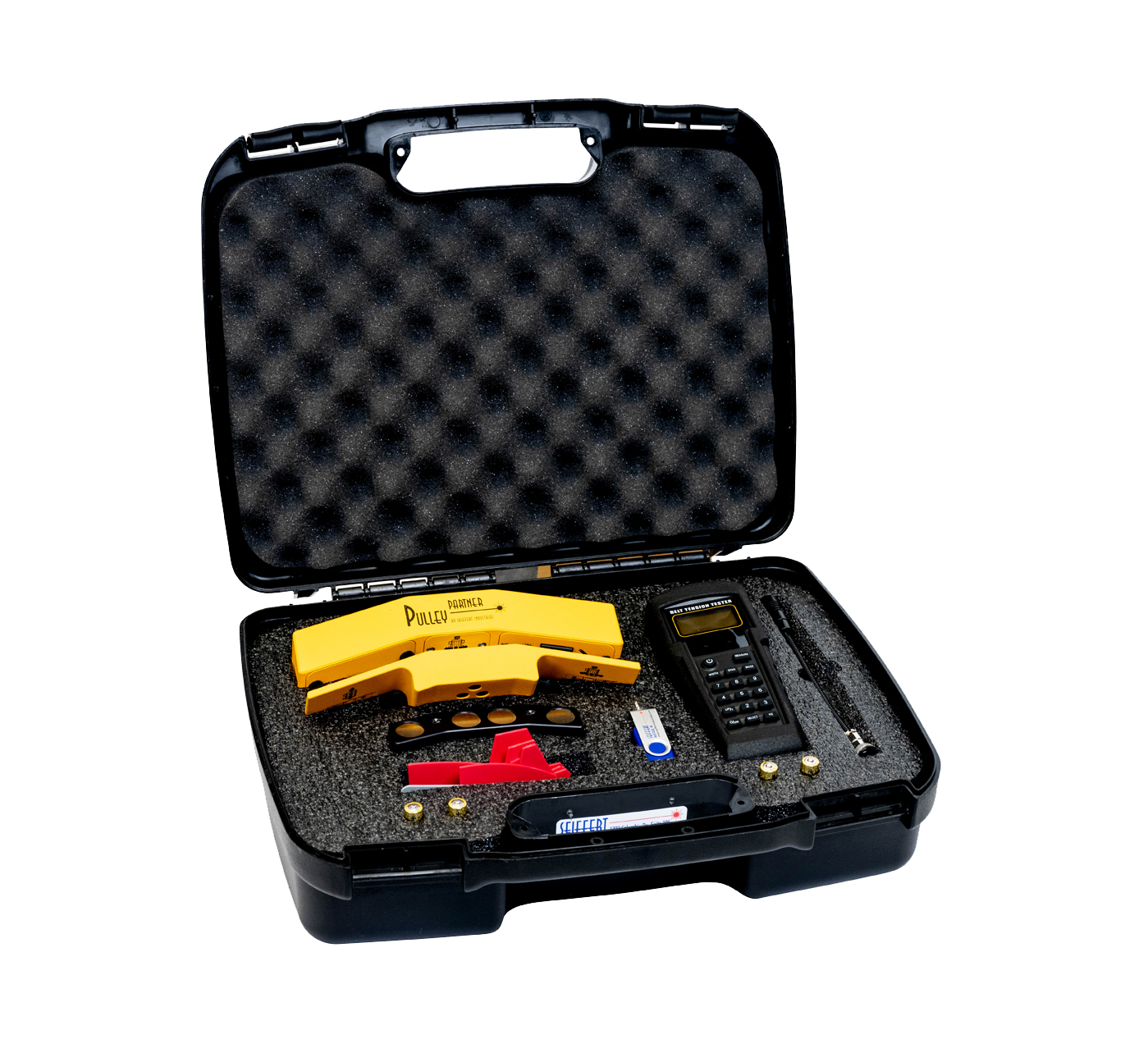
One of the most convenient features of the Seiffert Industrial KX-1590 is its 20 rejestrów pamięci pasa stałych. If you routinely work with the same machinery, storing those values can save time and help create more consistent maintenance routines.
The improved frequency range of 10–600 hertz also makes this tool incredibly versatile for different drive systems and operating environments. That flexibility allows technicians to measure a wide range of belt types without needing multiple devices.
Let the Belt Vibrate Naturally
One common mistake operators make is over-plucking or forcing belt movement during measurement. The key is to create a light, natural vibration in the belt and hold the sensor close enough to detect the frequency accurately.
Because the meter is designed for easy operation, anyone can quickly learn the process. Simply input the belt dimensions, create vibration in the belt, and allow the sensor to capture the reading. The LCD screen with black light makes it easy to read measurements even in dim industrial settings.
Another helpful tip: always take measurements while the machine is off and locked out safely. Consistency and safety go hand in hand when performing preventative maintenance.
Napinanie paska dźwiękowego Miernik jest łatwy w obsłudze
A sonic belt tension meter does much more than provide numbers on a screen. It helps create consistency across maintenance teams and reduces the chances of over-tensioning or under-tensioning belts.
Too much tension can overload bearings and shorten component life. Too little tension can lead to slippage, gromadzenie się ciepła, i zmniejszoną wydajność. By using measurable outputs in hertz, pounds, or newtons, technicians can make precise adjustments instead of relying on guesswork or “feel.”
Na szczęście, Miernik naprężenia paska Sonic jest niezwykle przyjazny dla użytkownika i łatwy w użyciu. Dokładny odczyt w przypadku napędów synchronicznych i z paskiem klinowym jest tak naprawdę zadaniem tylko jednej osoby. Wszystko, co musisz zrobić, to ręcznie wprowadzić stałą masy paska, długość pasa i rozpiętości, następnie przytrzymaj czujnik nad pasem, jednocześnie lekko brzdąkając, aby rozpocząć proces wibracji. Potem, właśnie nacisnąłeś przycisk pomiaru, aby uzyskać dane dotyczące częstotliwości, których szukasz.
Więcej informacji na temat korzyści płynących ze stosowania miernika naprężenia paska Sonic na paskach maszyn, skontaktuj się z nami w dogodnym dla Ciebie czasie.