When a belt drive system is running smoothly, it’s easy to forget just how much precision goes into keeping it that way. But when tension is off, even slightly, you can end up dealing with slippage, excessive wear, noise, vibration, and costly downtime. That’s why using a sonic belt tension meter is one of the smartest ways to keep your equipment performing at its best.
Countless industrial businesses that use machine belts have benefited greatly from using a Sonic Belt Tensioning Meter. To paraphrase, a Sonic Belt Tensioning Meter is used to make sure belts are working efficiently and have the correct belt tension. They provide the answers you need to determine whether or not the tension of the machine’s belts needs to be adjusted. They take the guesswork out of belt maintenance by delivering fast, accurate readings in a compact, easy-to-use design. Whether you’re working with synchronous belts or V-belt drives, knowing how to properly use your meter can make a big difference in both performance and equipment longevity.
Tips for Using a Sonic Belt Tensioning Meter
Start With the Right Belt Information
Before taking a reading, make sure you have the correct belt width and length measurements ready to enter into the device. Accurate input information is key because the meter calculates tension based on the belt’s vibration frequency. Even the best tool can only provide reliable results when the setup data is correct.
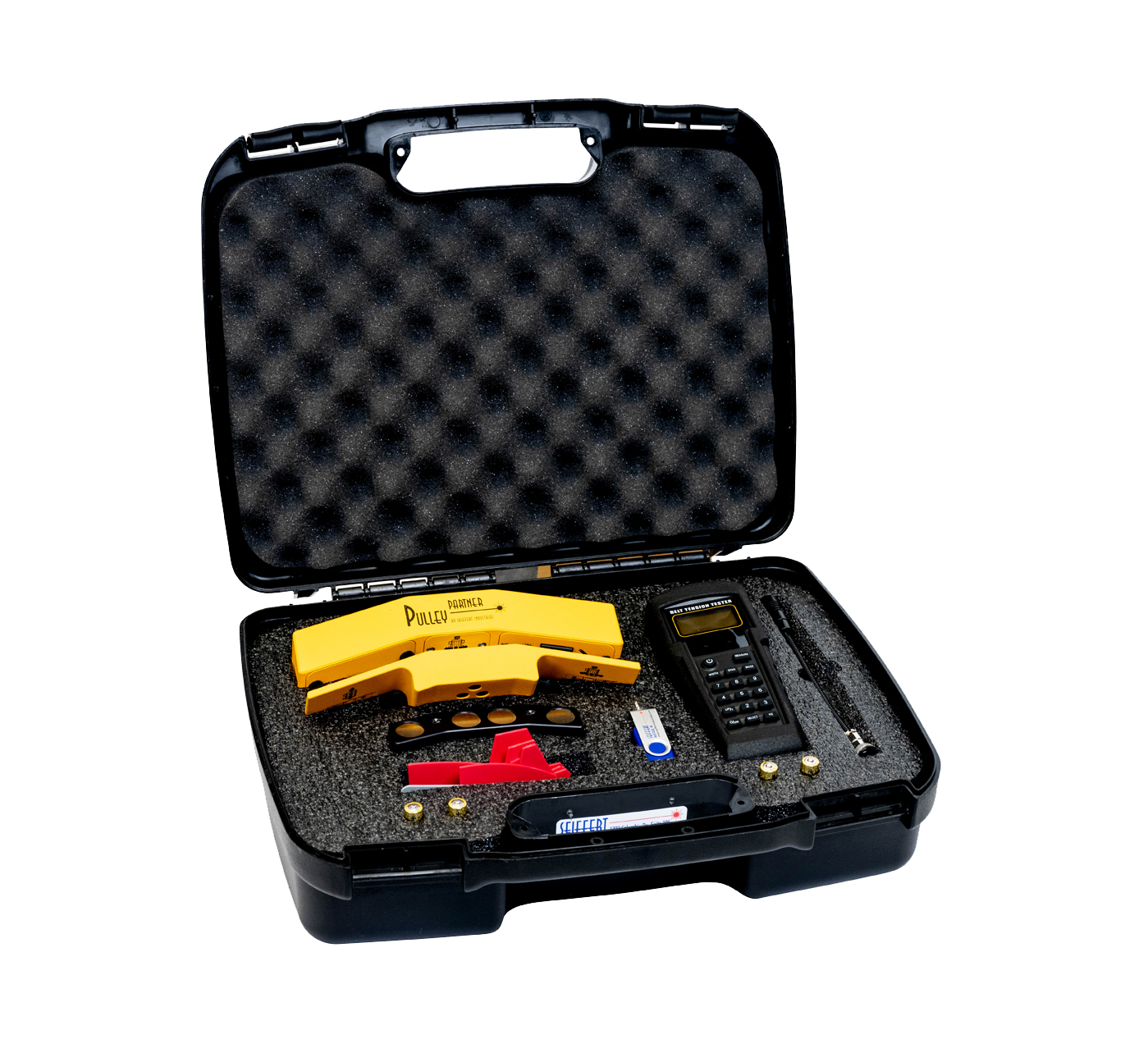
One of the most convenient features of the Seiffert Industrial KX-1590 is its 20 memory registers for belt constants. If you routinely work with the same machinery, storing those values can save time and help create more consistent maintenance routines.
The improved frequency range of 10–600 hertz also makes this tool incredibly versatile for different drive systems and operating environments. That flexibility allows technicians to measure a wide range of belt types without needing multiple devices.
Let the Belt Vibrate Naturally
One common mistake operators make is over-plucking or forcing belt movement during measurement. The key is to create a light, natural vibration in the belt and hold the sensor close enough to detect the frequency accurately.
Because the meter is designed for easy operation, anyone can quickly learn the process. Simply input the belt dimensions, create vibration in the belt, and allow the sensor to capture the reading. The LCD screen with black light makes it easy to read measurements even in dim industrial settings.
Another helpful tip: always take measurements while the machine is off and locked out safely. Consistency and safety go hand in hand when performing preventative maintenance.
The Sonic Belt Tensioning Meter is Easy to Use
A sonic belt tension meter does much more than provide numbers on a screen. It helps create consistency across maintenance teams and reduces the chances of over-tensioning or under-tensioning belts.
Too much tension can overload bearings and shorten component life. Too little tension can lead to slippage, heat buildup, and reduced efficiency. By using measurable outputs in hertz, pounds, or newtons, technicians can make precise adjustments instead of relying on guesswork or “feel.”
Fortunately, the Sonic Belt Tensioning Meter is extremely user friendly and is easy to use. It’s really just a one person job to get an accurate reading on synchronous and V-belt drives. All you’ll have to do is manually enter the belt’s mass constant, belt and span length, then hold the sensor above the belt, while lightly strumming to start the vibration process. After that, you just have hit measure to obtain the frequency data you seek.
For more information about the benefits of using a Sonic Belt Tensioning Meter on your machines belts, contact us at your convenience.